When the Cost of Staying In Bed is Too High
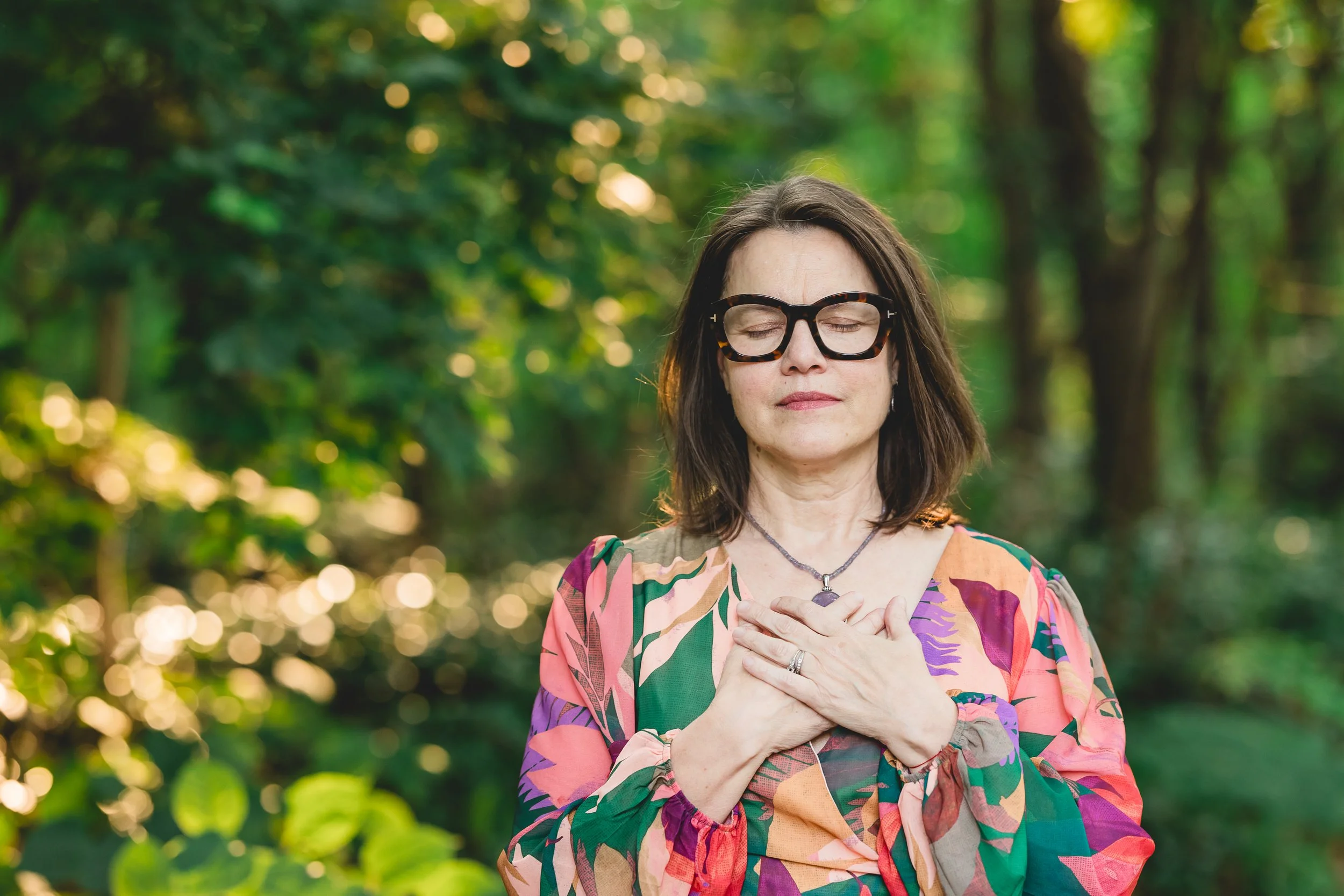
Photo of me with eyes closed, hands on heart
Hello Courageous Thrivers,
My old friend Depression came to visit me this week.*
It’s been a little while since the last time I felt her presence strongly enough that at 6 pm I was wondering how soon I could go to bed. And at 6 am, after 10 hours of sleep, I still didn’t really want to get up.
(Well, truth be told, I never really want to get up. I’ve let go of that as a goal and accepted that struggling to transition from sleeping to waking life is probably not ever going to be easeful for me—but I’m open to being wrong!)
Still, after 10 hours of sleep one would think I’d feel waking life calling to me. Not so much.
But I got up anyway.
I’ll share what helps me get out of bed here in case it helps one of you as well.
I’ve realized that the cost of staying in bed is too high. If I languish too long what I lose time for are the parts of my day that are most nourishing to me, which include: not having to rush, walking outside, eating a nourishing breakfast, journaling/prayer and, on 3 days a week, talking to a spiritual companion/friend from 7am-8am.
About 10 weeks ago I made a commitment to walk outside first thing in the morning for 90 days/3 months. I’ve found that most of the time this practice boosts my natural negative mood pretty immediately. Not always, but mostly. And I never feel worse. There’s scientific evidence that supports these effects, but my experience is what helps me to put on my toe socks and walking shoes get out the door.
I’ve noticed that my mind has a pattern of automatically scanning my day for what will be hard and what could go wrong. Purportedly so I can prepare to face it. It is probably obvious to you that this pattern does NOT make one want to get up and go. So, now, for the 15 or so minutes that I allow myself to languish in bed before standing up, I now choose to scan for what I have to look forward to, or what I’m grateful for.
The other thing that helps, though it doesn’t technically happen prior to me getting out of bed is that I now save my caffeine for AFTER the walk and WITH a high protein breakfast. This is a blood-sugar-balancing habit that has been LIFE CHANGING for me. It was hard at first, but the emotional and energetic benefits are so obvious, that now I’m very consistent with it.
So, I got out of bed. I walked. I ate. I talked with my spiritual companion friends. I did the things.
But despite all these tools, and connections with friends and meaningful work and trees and a safe house and SO MANY PRIVILEGES, each day I continued to feel heavier, less motivated, more tired. Just a little bit more each day.
“I’d better get to the woods,” I thought.
So I hopped in the car and drove to the woods closest to my house. As I arrived I noticed a thought. “My depression is comfy,” I thought.
I had the image-memory of an old down comforter I had as a child that I called my “puffy.” I saw myself wrapped up in it, held. Warm. Literally comforted.
It’s funny isn’t it? To think that I would feel comforted by an emotional state that is by definition not enjoyable?
Or maybe you can relate.
Maybe for you it’s being raging angry that feels comfortable and comforting. Or being in a place of righteous judgement. Or maybe, like me it’s melancholy, or depression.
You’ve probably heard this before, but if you’re like me, you may need a reminder. Our bodies feel comforted by what’s familiar, even if it sucks objectively. Even if it’s not what we want consciously.
I could feel this morning that after many months of showing up and taking uncomfortable action (often very boring “adulting” types of actions) in multiple areas of my life day after day — in particular in my marriage relationship, in my body, and in my business — cozying up in the comfort of familiar depression felt quite appealing. Literally comfortable.
I don’t want the results of a deep spiral into depression and collapse, though, comfy as it seems to parts of me.
I’ve been on this path long enough to know that I don’t need to be so afraid of Depression that I keep them at arms’ length, pretend they aren’t there, or ignore the longing for what’s comfortable and familiar. So I kept walking.
In fact, I chose a harder path because I knew from past experience that when I do a more strenuous hike it tends, paradoxically, to snap my brain and body out of weariness. I heard something recently about how if you tend towards a “freeze” response when you encounter stress (as opposed to flight/fight or fawn) that more rest can actually make you more tired. My experience in my body certainly reflects this pattern.
But here’s the other thing I did after my walk. I let myself get the comfort coffee that I still wanted.
This choice matters immensely. Why? Because the same part of me that gets depressed and feels powerless also works very hard all the time to be “good.” In the world of perfect self-help standards the walk should have been enough. I shouldn’t also need the $6 coffee in order to feel comforted. First world problems/white girl problems and all that. True . . .
But that kind of all-or-nothing judgmental thinking does all kinds of harm to all of us. So I no longer let it be the final decision-maker.
In this context being “bad”/imperfect has some power to it. It breaks the hold of harsh judgement, which, for me, is closely connected to my relationship with Depression. Being bad, is good for me sometimes. It supports my ability to do my work in the world, rather than harming it.
As evidence—now, I’m here. Writing to you.
There’s a lingering melancholy present, but Depression has given me some space. She needed the challenge of the hills we hiked AND she still wanted the comfort of the extravagant coffee I purchased.
The power of both/and. Once again.
Often those of us who are deeply empathetic, sensitive, and prone to negative thought patterns fall into the error of constantly doing the hard stuff without receiving into our hearts, minds and bodies the nourishment and resources that we need to feel vibrant, alive and hopeful.
And then we collapse. In burnout. In depression. In hopeless powerlessness.
But we don’t ONLY need to receive. We ALSO need to show up in service of collective thriving.
Those of us who live in relative safety and security, need to choose to rub up against challenges that our circumstances don’t automatically offer us.
Especially if we are sensitive, introverted and long for a more just world, even though we may find it easier to hang out at home all day.
Just as with erotic pleasure, we need the right amount of friction to release the pleasure and power of being truly alive. Our souls need the nourishment of life with other humans.
For example, I currently work from home, in a quiet single, on a dead end street on the edge of a small city. Even though I work for and write about justice and equity a lot, I’m in a phase where I’m not personally connected to many people who are in more challenging situations than I am.
My Depression reminded me that she needs me to put myself in places where I am in proximity to people who are suffering in ways that I am not; empathy for others takes me out of the powerful self-focus that Depression leads towards.
And it’s aligned with what I want to create — Beloved Community.
She needs me to speak up for grace as a foundation for justice work before I’m 100% ready and healed and perfectly confident in my ability to do a good job at it, because Depression gets stronger in cycles of shame that arise from me not living my values.
These are metaphorical hard, uphill hikes.
Challenging, but also beautiful and empowering.
But leaning into the challenges isn’t enough by itself. We also need to open to receive the nourishment that is available to us.
My Depression reminded me that she also needs me to receive the soul-nourishment of my current circumstances which include proximity to woods, and money for coffee, and time to sit on a screen porch in quiet contemplation, and a deepening interdependent relationship with my husband of over 30 years.
She needs me to open to receive the CONTROVERSIAL GRACE of my very privileged circumstances, fair or not. (And it’s not fair that I have this and others don’t. 100% not fair.) Because opening to receive the gifts and support available to us is how soul-nourishment happens.
I don’t always understand these paradoxical realities with my head. But I experience the truth of them in my body.
What paradox are you sitting with in your life today? I’d love to hear about it and learn from your experience.
Here’s to thriving and equity, challenging hikes and comforting coffees,
Deb
NOTE: *What I experience is probably more accurately named “dysthymia”. I have never experienced a deep depression that made daily life impossible. Nor am I saying that my experience is like anyone else’s. My depression/dysthymia is much less of a force in my life now than it was in the past, but I suspect it will continue to show up upon occasion. Of course, if you are experiencing a deep depression I encourage you to get professional help from a therapist. I’ve gotten a lot of that, along with learning to use other practices to support myself on my healing journey.
RELATED READING: Soul-Starved And Trying Hard To Do What's Right
RECOMMENDED RESOURCES:
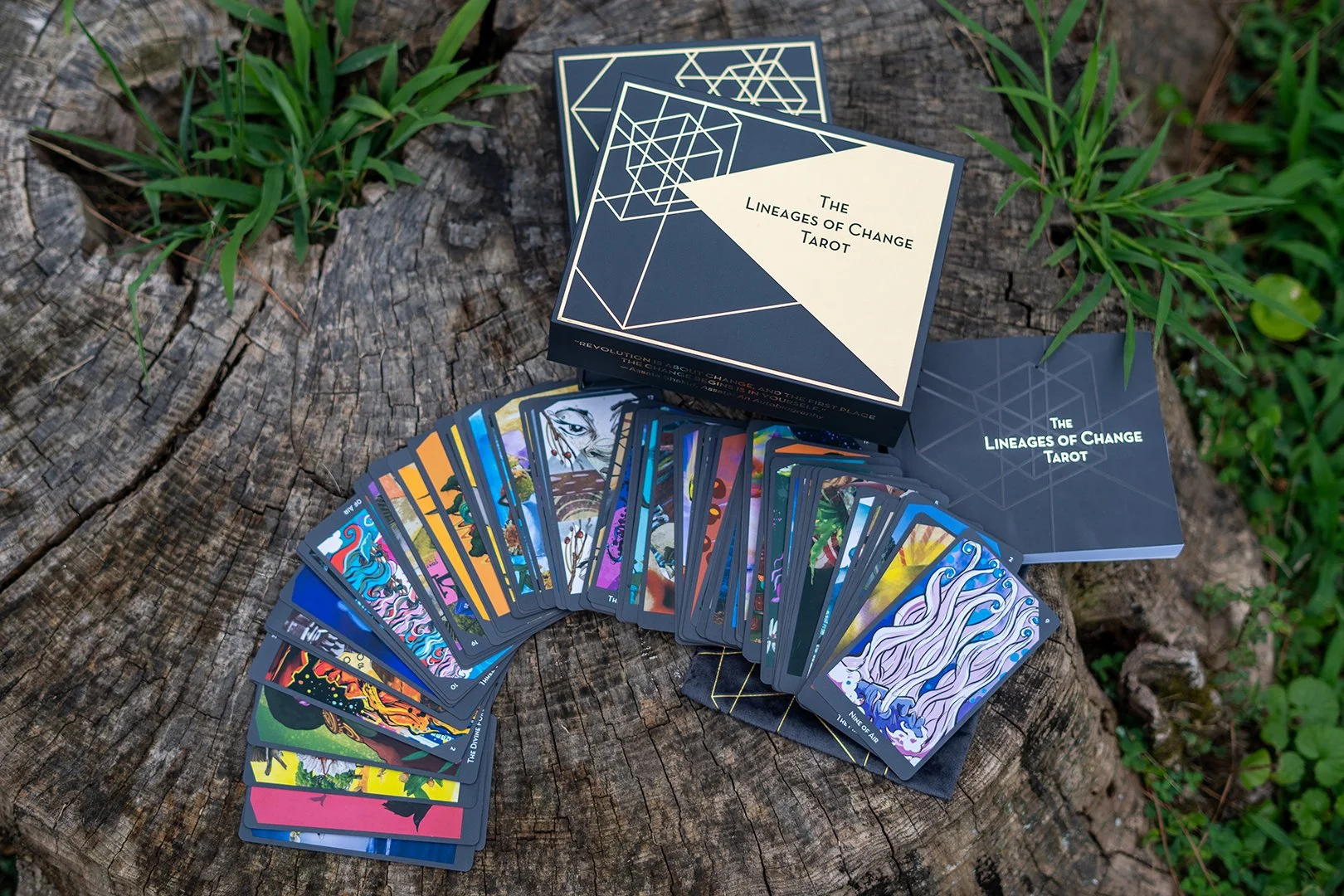
📖 I was reminded of the relationship between friction and pleasure while doing a reading with The Lineages of Change Tarot Deck, created by adrienne maree brown and chelsea cleaveland. I’m just beginning to work with it, but what I love about it is that it’s based on the writings of Black changemakers, especially Octavia Butler. The accompanying book includes quotations from their works as well as herbal companions with each card. I also love the card spreads that adrienne created specifically for this deck - including one for centering and the way the introduction places Tarot in historical context and explains how the creators of this deck have found it useful today, and why and how they decided to create this particular deck.
🎙️ I learned how to balance my blood sugar “no white knuckling required” from integrative health coach Ali Shapiro's Truce With Food.