On Weaving Difference
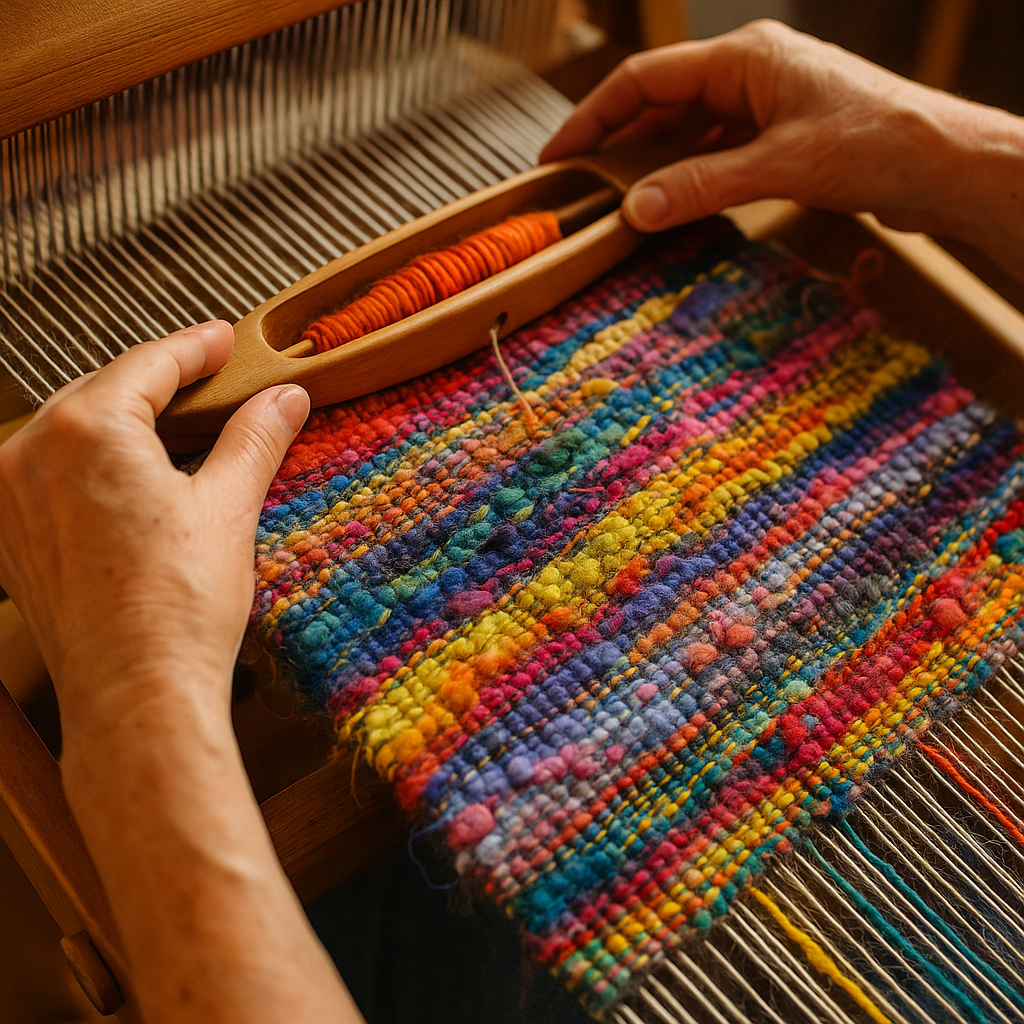
Weaving teaches us that difference is not a threat to belonging — it’s what gives the whole its strength.
Hello Courageous Thrivers,
Last week I reflected on weaving and encouraged you to use that metaphor to assess your year — and perhaps your life — with greater gentleness and greater honor. I hope you found that journey supportive.
As I prepare to launch Controversial Grace over on Substack (new and final launch date for the first newsletter is December 20, with the first live virtual gathering for paid subscribers happening on January 5), my plan there is to post twice a month:
one Feel Better post (to support readers in feeling happier and more alive as individuals) and one Do Better post (to help us lean into action for collective liberation).
I don’t plan to follow that rhythm here. These will continue to be the self-reflective, free-flowing posts you’re used to. But this week’s piece naturally appeared as the “Do Better” follow-up to last week — continuing the weaving metaphor.
So here goes.
Weaving Dignity Into How We See Ourselves
I ended last week by suggesting that if you saw your year, or your life, as a weaving — with traits and experiences intertwined into a beautiful whole — and saw yourself as part of a greater weaving of objects “each with their own dignity,” then perhaps you might know in a new way that you have dignity as a unique part of the whole.
You would know that you are connected.
In many ways the same as all the humans on this planet.
Not better.
Not worse.
You would know that somehow, in some way, we are being woven together by a force of Love that sees both our uniqueness and our shared humanness.
You would feel in your bones that every other human, at their core, is worthy of grace and honor.
Even — and especially — those who appear on the surface to be unworthy.
They just are.
As you just are.
You would see their dignity.
Learning to Notice and Name Difference
With that in mind, I want to focus this week on noticing and naming difference, which is an essential skill we need to learn (good girls especially) if we’re going to build a world in which all little girls are safe, all gender-nonconforming humans are respected, and Black women aren’t constantly expected to meet unreasonable and inhumane demands.
When my colleague Andréa and I train coaches in how to create inclusive practices and culturally safe spaces, we start by having them practice noticing and naming differences between them.
This is always uncomfortable.
Even for me.
Because the culture I live in has taught me to pretend I don’t see differences — especially those that create labels of “less than” in the cultural value hierarchy. Differences in body size, skin color, physical ability and disability, gender, class.
For example, I don’t want to use the word “fat” to describe someone, though it’s really just a descriptor — because in U.S. culture it has become an insult. Especially for women, and even more so for middle and upper class white women, because of the way body size is ranked.
For many white people, naming that someone is living in a Black or Brown body is extremely uncomfortable. We aren’t supposed to admit that we see this difference.
Why?
Because doing so means we have to admit that the injustice and cruelty all around us is something we actually see. It exists. It’s not an accident.
Noticing and naming differences means facing the truth that we have ranked people’s value based on particular traits.
We can no longer pretend to be “colorblind.”
We can no longer live in the fiction that we “see everyone as just human.”
We don’t.
No one does.
No matter how much I consciously believe that all people are equal, my brain is constantly making judgments about who is worth my time and who isn’t.
Yours is too.
And also — as humans, we want to belong.
And all these rankings and injustices have made sameness a requirement for belonging.
Difference as a Source of Belonging
But that’s not true in a weaving.
What makes woven art so stunning are the differences.
Even when there is some sameness (like a basket made of willow branches), the variations among the individual pieces provide both strength and character to the whole.
So as you move through this time of different traditions and holidays, and perhaps gather with people who live differently than you do, I wonder:
Can you notice and name the differences you see (perhaps just in your own mind) with curiosity rather than judgment?
Can you get curious about who in the room or at the table might be feeling as if their differences mean they don’t belong — and reach toward them in some way?
Can you ask your ancestors or guides who know about weaving beauty out of difference to help you see beauty where before you saw only challenge?
I’d love to hear what you notice.
Deb
Reflection: Practicing the Art of Noticing
Q: Why is naming difference so uncomfortable for many of us?
A: Because we’ve been trained to associate difference with danger — especially if we grew up in environments where sameness was quietly demanded for belonging. Naming difference means acknowledging the hierarchies and harms we’ve participated in or benefited from. It requires courage, not neutrality.
Q: How do we notice difference without slipping into judgment, comparison, or shame?
A: By starting with curiosity. Curiosity loosens the grip of defensiveness and lets us ask, “What is this difference showing me?” or “What becomes possible when I see what is actually here rather than what I wish were here?”
Q: What does the weaving metaphor offer us as we navigate diverse communities and traditions?
A: It gives us a way to imagine belonging that does not depend on sameness. In a weaving, contrasting textures and colors strengthen the whole. Difference is not a threat — it is how beauty holds together.
Q: Where do I begin if I want to practice this more intentionally?
A: Begin with the smallest honest noticing. One difference. One moment. One person you might reach toward. Weaving happens thread by thread.