Creating Movements Where No One Is Disposable
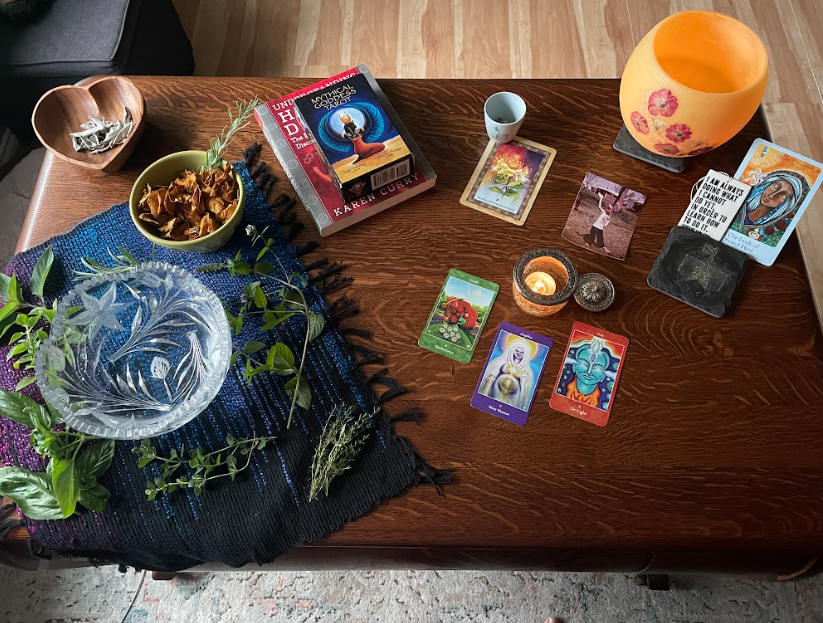
Simple beauty can steady us as we learn to stay present with discomfort.
What Would It Look Like to Create Movements in Which No One Is Disposable?
What Movements Reveal About Power
I raised this question with my class a couple of weeks ago while we were discussing For the Children? Protecting Innocence in the Carceral State by Dr. Erica R. Meiners.
The question is rooted in abolition feminism — of which I am a rather new student — but from the moment I began learning about it, the ideas have resonated deeply.
In prior classes, we had discussed readings from Histories of the Transgender Child by Julian Gill-Peterson.
This week, three student groups presented on questions related to transgender children, one of which highlighted a time when transgender humans were pushed out of sight in Gay Rights movements.
Why?
Because in 1973, homosexuality was removed from the list of “disorders” in the Diagnostic and Statistical Manual (DSM) of the American Psychiatric Association — only to have “Gender Identity Disorder” added in 1980.
Now, the DSM is problematic in multiple ways (well beyond the scope of this blog), but if you want more on that, check out Sarah Fay’s memoir-critique Pathological.
The point here is that naming something a disorder has power.
When homosexuality was normalized and being trans was “abnormalized” by the DSM, power was gained by some and lost by others.
It’s understandable that Gay Rights activists at the time focused on gaining what power they could.
It’s very human — perhaps even strategic — to seek the relative safety of a new, less hostile reality.
They still had plenty of battles to fight, as is even more clear today than it was then.
Furthermore, I’m not part of the Lesbian-Gay-Queer community, so I have no lived experience of the pain that came from living under the diagnosis of a “disorder,” or the relief and dignity of finally having one’s identity recognized as normal.
It was a big win.
So this is not a critique of the individuals or movement leaders who made those choices.
It’s a noticing — of one instance among many — in which an oppressed group held onto what little safety and recognition they had access to, while “disposing of” another, even more marginalized group.
When Safety for Some Becomes Harm for Others
The LGBTQ+ community has since expanded to become much more inclusive than it was in the 1980s, recognizing rather quickly that no one is safe until we are all safe.
I’m not sure white women have gotten this message yet.
Especially those of us who hold a lot of other privileged identities alongside our whiteness.
White women have acted, over and over again, as if Black and Brown women are disposable — as is well documented in feminist movements in the U.S. since at least the mid-19th century.
And, more recently, in the two elections of Donald Trump to the presidency.
Some might argue that it might actually be necessary or strategic.
I don’t know.
Sometimes it’s simply the best we know how to do at the time.
Sometimes there’s trauma in our bodies that takes over our hearts and minds, and we act (or don’t act) from fear — or from the fears of our ancestors — rather than from our consciously held values.
I think the latter happens a lot.
And if our actions (or inactions) are trauma responses, then yelling at ourselves to “be better” isn’t going to bring the change we want to see in the world.
Why Shame and Perfectionism Cannot Transform Us
Here’s the other uncomfortable truth:
If we are to build movements where no one is disposable, then that means privileged white women aren’t disposable either.
Neither are extremely problematic white men.
Neither are billionaires.
I don’t say this to let anyone off the hook — not at all — but rather to propose a how: a way forward.
I am calling on white women to offer ourselves grace, and to extend that grace to other white women we may think of as being “worse” than we are — and even to white men.
Because grace is what allows our terrified parts to show up.
Grace is needed if we’re going to learn how to offer safety and self-compassion to bodies that are convinced we are in more danger than we actually are — and therefore cannot show up for those who truly are in danger.
If harsh lectures worked, the world would be a very different place by now.
Courageous Action Without Disposability
And at the same time, we must empower, challenge, and support ourselves to take courageous actions — actions that demonstrate not just that we want a world where no one is disposable, but that we are actively helping to create it.
Always the both/and.
Here’s to thriving and equity, compassion and courage.
Deb
P.S.
To be clear, it’s not my place to call on Black and Brown women to offer grace to multi-privileged white women.
Nor is it my place to call on members of the LGBTQ+ community to offer grace to cisgender heterosexuals like me.
Many do — for reasons that are theirs to share.
I hear from them that it’s exhausting work, and that they make sure they have good boundaries and strong support as they do it.
They are deeply rooted in love.
Some choose not to offer grace to those with more privilege, or at least not up close.
That makes total sense — and is often the healthiest way forward.
I honor those choices.
I keep my distance when that is desired.
And I partner with those who want to partner with me.
Reflection: Learning to Build Movements Where No One Is Disposable
Q: Why do movements committed to justice sometimes repeat patterns of harm?
A: Because when our bodies carry trauma responses — collapse, freeze, shutting down, or grasping for safety — we often reach for control instead of compassion. Without self-awareness, those patterns spill outward into our communities.
Q: How does grace help us stay in the work rather than withdraw?
A: Grace interrupts the shame spiral that tells us we’re failing. It gives our frightened parts enough room to breathe so accountability becomes possible rather than overwhelming.
Q: What does it mean for privileged white women not to be disposable either?
A: It means we cannot build a world where no one is abandoned if we abandon ourselves whenever we fall short. Grace doesn’t erase responsibility; it gives us the inner grounding required to meet it.
Q: Where do I start if this feels overwhelming or uncomfortable?
A: Begin close in. Notice where shame or defensiveness shows up in you. Offer compassion there first. Sustainable action grows from compassion, not self-punishment.
If you’re ready to explore what it means to stay in the work without collapsing into shame or perfectionism, I’d be honored to walk with you. You can learn more about my 1:1 coaching here.