Start Now (New Years is Overrated)
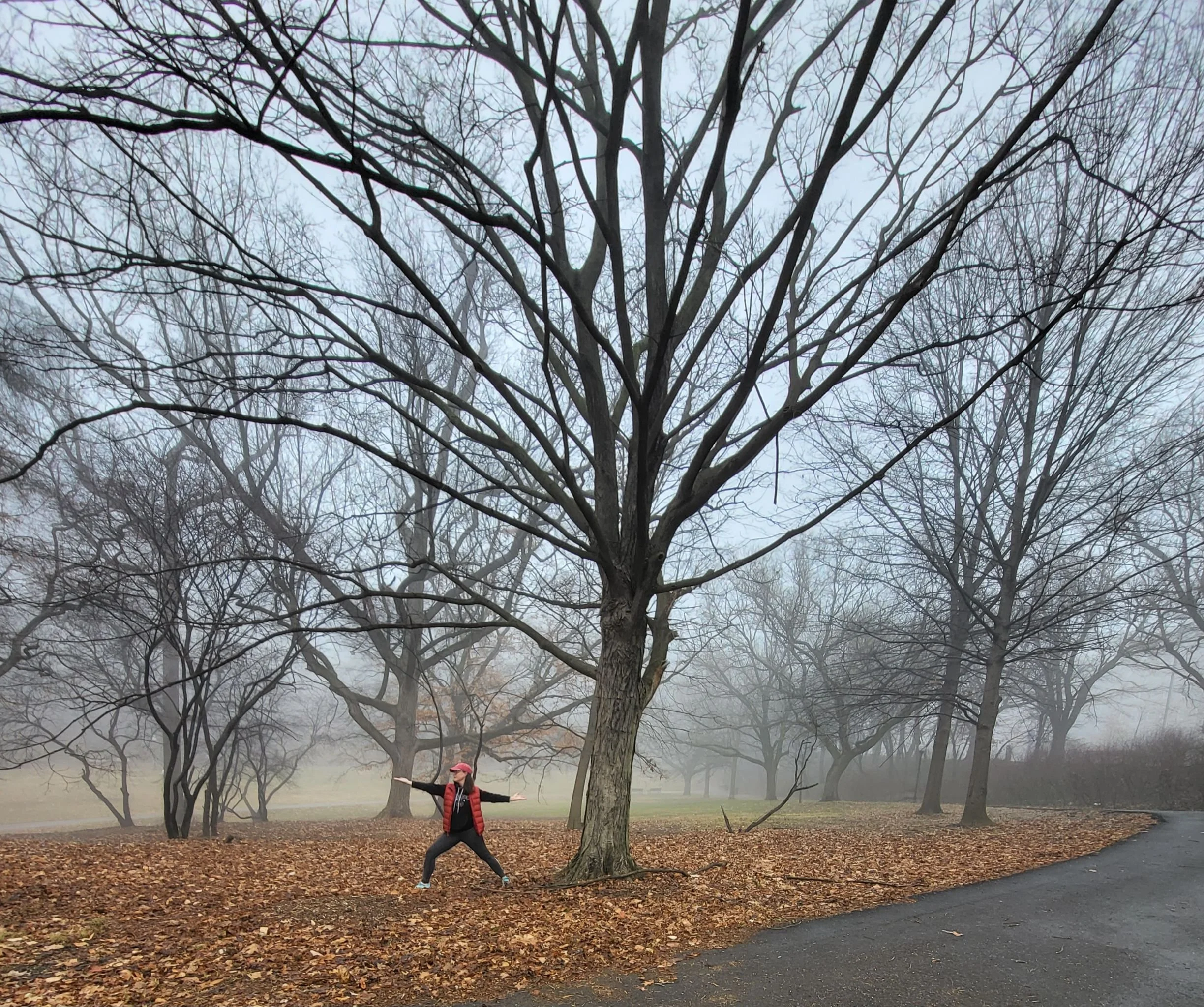
Some days the practice is simply showing up, arms wide, exactly where you are.
Hello Courageous Thrivers,
I have a Joyful January tip for you: the best time to start a new habit is usually now.
Not tomorrow.
Not on Monday.
Not next New Year’s Day.
Now.
So many of us plan to start new habits when we have what feels like a “clean slate,” a “new page.” And it’s true that there can be supportive energy in a new space that isn’t cluttered with past habits, mistakes, and disappointments. I especially love taking advantage of New Moon energy for this.
And.
For those of us who tend toward perfectionism and all-or-nothing thinking, this “start with a clean slate” mindset can actually undermine our chances of success.
The Problem With Clean Slates
That’s one reason New Year’s resolutions tend to fail.
For a new habit to stick, it needs to be able to survive the mess of our human imperfections, as well as the obstacles daily life throws at us, both internal and external.
If a practice only works when conditions are ideal, it’s not sustainable.
Why Starting Now Works
In my experience, that’s why starting now can be so powerful.
Starting now says, “I don’t need perfect timing or perfect conditions. This matters enough to me that I’m willing to take a step toward it in the middle of everything else.”
There’s also this quiet truth we don’t talk about much: it takes a lot of energy to procrastinate and avoid something we know matters to us. When we start now, we often reclaim that energy right away.
Momentum doesn’t come from waiting. It comes from movement.
Where Change Actually Happens
So if you’ve been thinking about something you want more of in your life in 2026, the invitation I’m offering you today is simple.
Start now.
Start on the random date of January 15.
Or February 3.
Or whatever day you happen to be reading this.
Start on a day that isn’t any kind of special beginning or ending. A normal day, in the middle of your normal life.
Because that’s where change actually happens.
Deb
Reflection:
What’s the benefit of starting in the middle of real life instead of waiting for a fresh start?
1) It helps your body and your mind learn that change does not require perfect circumstances, which makes it easier to keep going when life is lifing.
2) Sometimes, we genuinely need to pause and rest. But if what we’re doing is waiting for the perfect moment to start, often that moment never comes. We get discouraged and pile up more evidence that change isn’t possible. That’s why it’s usually better to find the smallest step we can take in the direction of what we desire and do it, even when our moods and external circumstances don’t seem to be on board - yet. Those small steps add up and build our resilience and self-trust, and we begin to see that progress is possible.
How can I tell if I’m procrastinating or actually needing rest?
There’s no one-size-fits-all answer to this question, but here are a couple of tips:
1) If even doing something you usually love doing feels like work, you probably need rest. Try putting your legs up against a wall for 5 mins, or set a timer and take a 20 min nap. Or go for a 10 min walk in nature. All of these can be restful options. See if you feel more able to take an action after that.
2) Another experiment you can try is to do a “brain dump” of everything you feel you need to do in the moment, then scan it for a task that’s been coming up for weeks or months but you haven’t done. When you see that kind of pattern, you can be pretty sure you’re procrastinating. At that point, you get to decide. Admit that you’re not ever going to do the task, OR decide what the next tiny part of the task is and do it. For example, if you have something you’ve been needing to mail, the next step probably isn’t “mail X,” it's more likely something like. Go to the basement to see if I have a box that works to mail X.
3) And the other piece to this is that often you won’t know in advance which it is. You’ll try resting one day and decide based on the impact that it was exactly what you needed. Another day, you’ll wish you hadn’t taken that afternoon nap. I’ve experienced both of these outcomes in the past couple of weeks. But when you act like a scientist and take it all as data, over time you’ll be better able to understand yourself and make supportive choices more often than not.